

Extraction is the best solution, but this may not always be possible, in which case the only option is to “filter” the air and recirculate it back into the room. Whether extracted or recirculated and “filtered” there are 3 options to consider
Option 1 – the extractor rises from the worktop (pop-up extractor)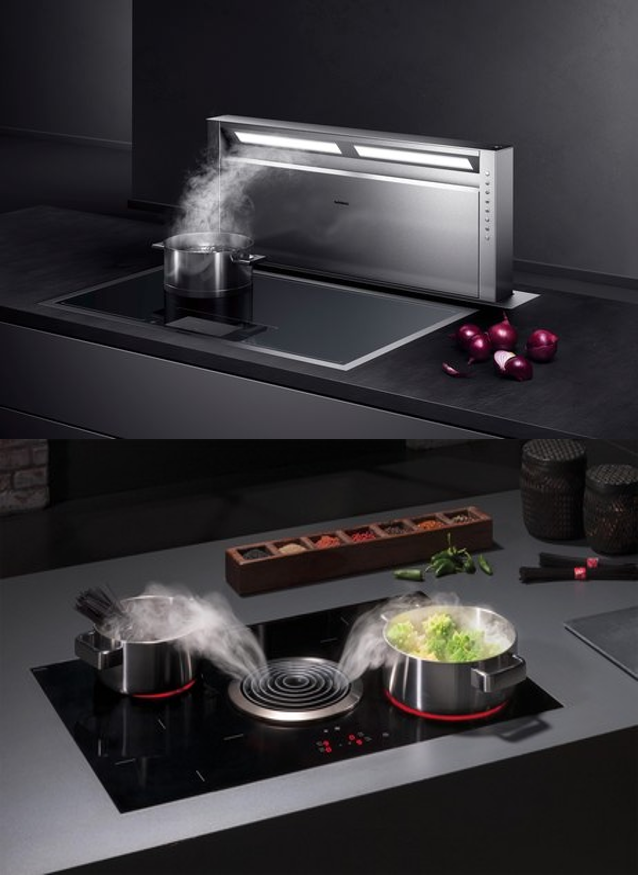
Pros: compact & stylish, creates a splashback and built in lighting can illuminate the cooking area.
Cons: reduced storage space in cupboards beneath, partially obstructs the view beyond the worktop
Option 2 – the extractor is built into the hob
Pros: less clutter on the worktop, automatically starts extracting when hob is switched on, sleek integrated design.
Cons: usually more expensive and compromises both extractor function and the hob. The extractor is pulling the hot air down (against the laws of thermo dynamics – hot air rises!) and the extractor grill takes up space on the hob which would otherwise be used as a cooking zone.
Option 3 – Ceiling Mounted
Pros: does not clutter the cooking area and can look quite good.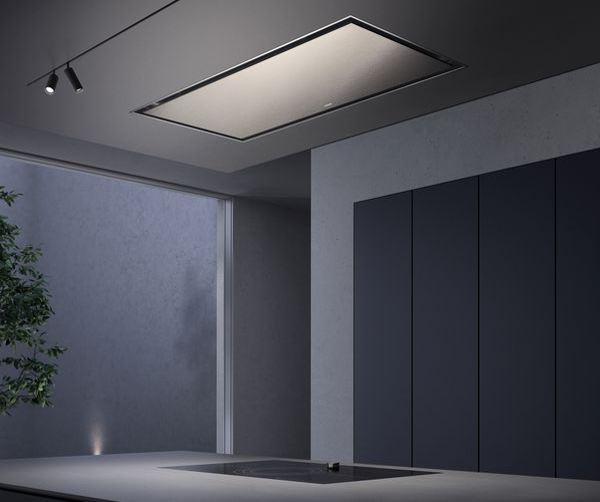
Cons: cleaning and maintenance is difficult and hazardous ( how do you reach to clean filters with the hob directly underneath ) Ceiling voids are usually full of other building equipment with little space for the extractor ( whether extracting or recirculating )
Conclusion
All the extraction options for kitchen islands are compromised however 2 key points should never be forgotten.
- all extractors have washable (dishwasher) grease filters which should be cleaned at least once a month. This is a crucial task which ensures the extractor works efficiently.
- all extractors should be switched on 10 minutes before cooking commences to get the airflow moving within the space and into the extractor.